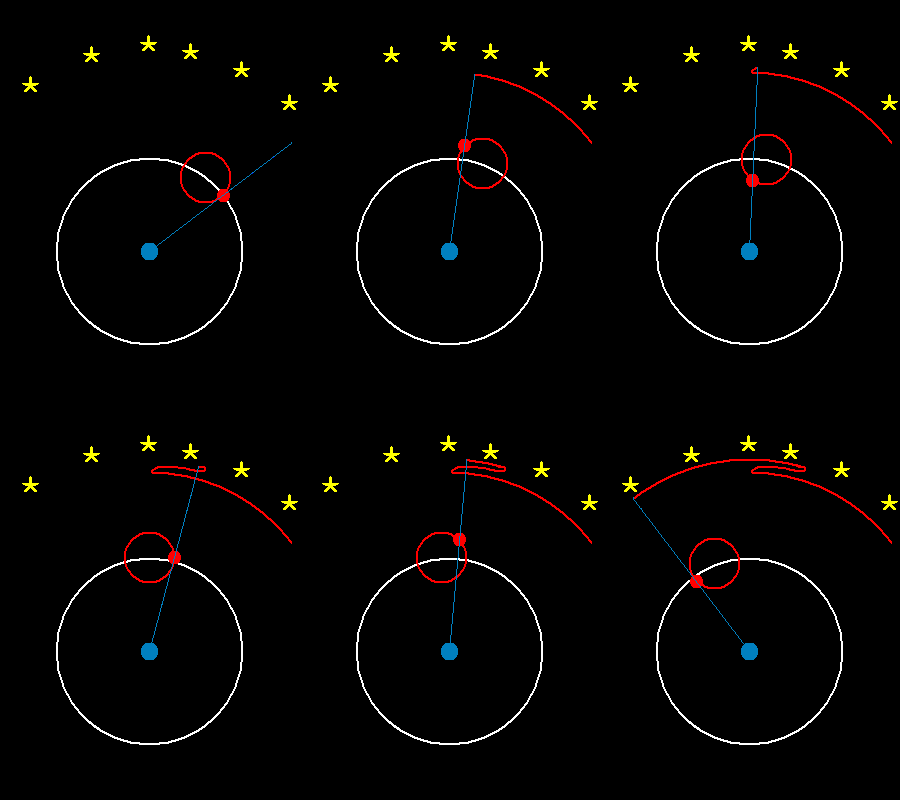
The concept of "Mercury Retrograde" has become a household name, because the mass media has promoted it well. Astrologers talk about it often too, because Mercury's retro periods (unlike other planets) occur several times a year - sometimes 3, sometimes 4. In general, people like to focus only on regular phenomena such as Full Moon or eclipses, forgetting that the giant planets also turn retrograde twice a year, and this greatly affects the global situation and the development of worldwide processes. But everyone likes to watch the cycles of the small planets - the Moon and Mercury, which are responsible for fleeting circumstances in our private lives. I will devote my other article to the lunar cycles, but today I will analyze in detail the phenomenon of Mercury retrograde in astronomical terms.
 Please wait
  Astrological forecast: who would win the 2020 USA presidential election, and what awaits America in the next four years? Analysis based on the horoscopes of the candidates - Donald Trump and Joe Biden.